Expert Attic Mold Remediation in Omaha, NE
A1 Mold Testing & Remediation serves the Omaha, NE, area with certified professionals who eliminate attic mold and restore healthy indoor air. If you suspect attic mold in your Douglas County home, call (402) 964-2080 to request a free quote and schedule an inspection.
Attic mold is one of the most common and overlooked problems in Omaha-area homes. A1 Mold Testing & Remediation specializes in attic mold remediation in Omaha, NE, serving homeowners across Douglas County and surrounding communities, including Millard, Elkhorn, Dundee, Benson, Ralston, Papillion, Bennington, and Gretna. The region's climate creates real and recurring mold risk, and A1 brings certified expertise and proven methods to protect your family and your home's structure.
What Causes Attic Mold in Omaha Homes?
Omaha's climate is a primary driver of attic mold. Harsh winters with repeated freeze-thaw cycles allow warm, moist air from inside a home to rise into under-ventilated attics and condense on cold roof decking. Ice dams can force water under shingles and into insulation. During humid summers, heat and moisture build rapidly in attics with poor ventilation.
Common causes include:
- Bathroom exhaust fans vented into the attic rather than outdoors, depositing moisture directly onto roof sheathing.
- Inadequate insulation that lets conditioned air escape and condense on cold surfaces during Nebraska winters.
- Roof leaks from aging shingles, cracked flashing, or storm damage.
- Whole-house humidifier overuse raising indoor moisture levels significantly.
- Poor ridge or soffit ventilation that traps heat and humidity.
Left unaddressed, mold may spread across roof decking, rafters, and insulation before a homeowner notices a musty smell.
How Is Attic Mold Removed?
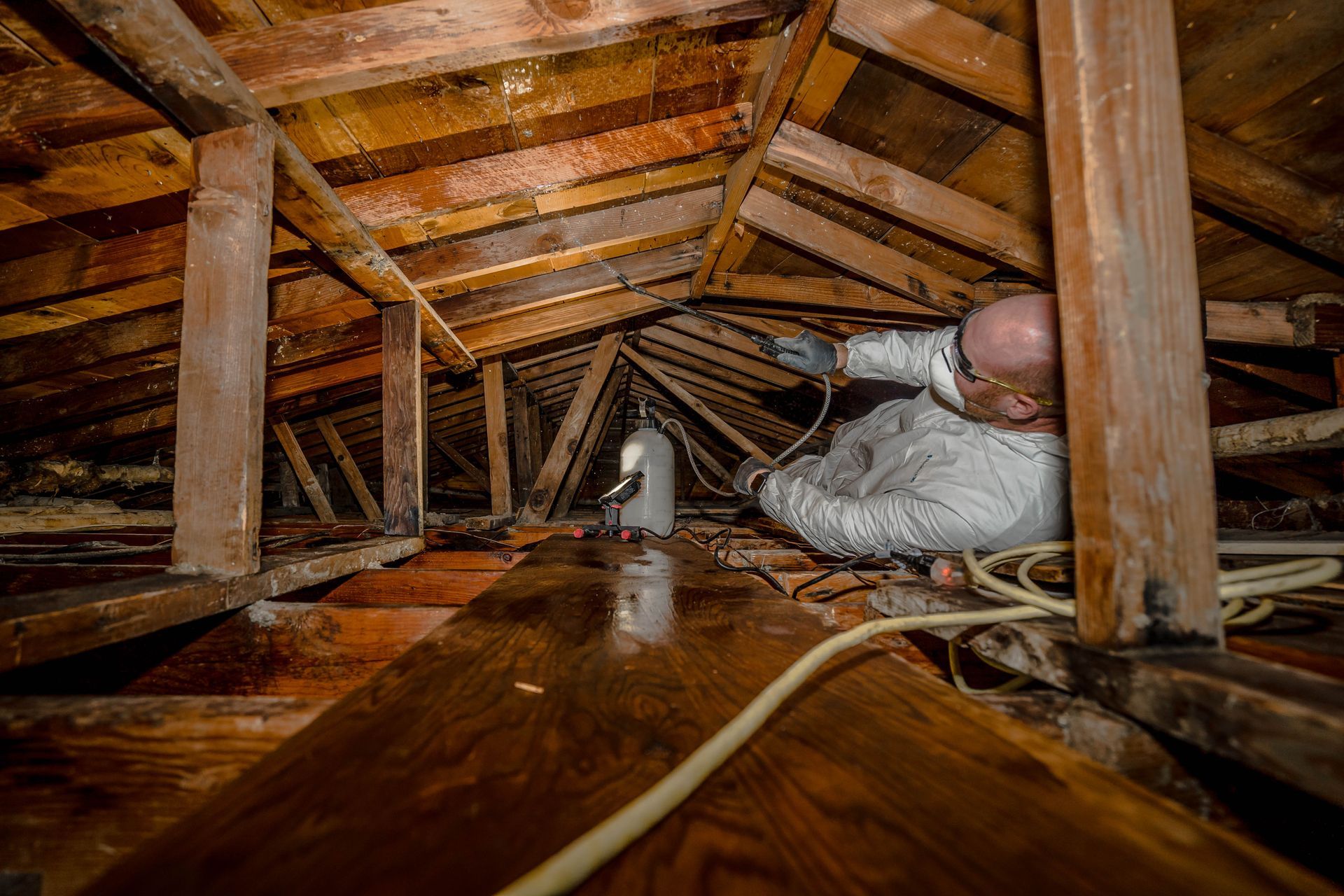
A1 Mold Testing & Remediation follows a systematic approach to attic mold remediation to ensure thorough removal and prevent cross-contamination:
- Inspection and assessment using moisture meters and infrared cameras to identify the full extent of growth and active moisture sources.
- Containment of the attic space to prevent spores from spreading to living areas during remediation.
- Safe removal or treatment of affected materials, including insulation, sheathing, or structural wood, based on severity.
- HEPA filtration and antimicrobial treatment of all affected surfaces to eliminate spores and inhibit future growth.
- Post-remediation clearance testing to confirm the attic meets safe air quality standards before the project is closed.
Structural wood can often be cleaned and preserved. When mold has compromised roof decking or framing, replacement may be necessary. Every project receives a custom remediation plan matched to the specific mold type and scope of damage. Reach out to
A1 Mold Testing & Remediation to get started with a professional assessment.
How Do You Prevent Attic Mold From Returning?
Addressing the root moisture source after remediation is what keeps mold from coming back.
Effective prevention steps include:
- Venting all bathroom and kitchen exhaust fans directly to the exterior.
- Sealing attic air leaks around plumbing vents, electrical penetrations, and HVAC chases.
- Upgrading soffit and ridge vents to promote consistent airflow and reduce humidity.
- Scheduling annual attic inspections after winter to catch ice dam damage or new moisture intrusion.
- Monitoring indoor humidity and keeping levels within a healthy range during heating season.
These steps after attic mold remediation significantly reduce the likelihood of recurrence. For full-service options, visit the
mold remediation services page.
Frequently Asked Questions
What Are the Signs of Attic Mold in an Omaha Home?
Common signs include a persistent musty odor near upper floors, dark staining on roof sheathing or rafters, and worsening allergy or asthma symptoms. A professional inspection may be the only way to confirm mold presence, since the attic is rarely visible from living areas.
Is Attic Mold Dangerous to My Family's Health?
Attic mold can pose real health risks if spores migrate into living spaces through gaps, recessed lighting, or HVAC systems. Exposure may trigger respiratory issues, allergic reactions, and chronic congestion. Certified removal is the most reliable way to eliminate the risk.
How Long Does Attic Mold Remediation Take in Omaha?
Most attic mold remediation projects are completed within one to several days, depending on attic size and extent of growth. A1 Mold Testing & Remediation provides a project timeline after the initial inspection. Contact the Omaha office at (402) 964-2080 for scheduling details.
Does A1 Serve Areas Outside Omaha?
Yes. A1 Mold Testing & Remediation serves the greater Omaha metro area, including Papillion, Bennington, Gretna, Bellevue, and Council Bluffs, IA, with teams based in both Omaha and Lincoln, NE.
Will Homeowner's Insurance Cover Attic Mold Removal?
Coverage varies by policy. Insurance may cover remediation when mold results from a covered peril such as a sudden roof leak or storm damage, but typically excludes mold caused by long-term neglect or poor ventilation. A1 can provide documentation to support a claim. Scheduling an evaluation is a practical first step before contacting your insurer.
Contact A1 Mold Testing & Remediation Services
A1 Mold Testing & Remediation brings certified experience to attic mold remediation, employing Certified Indoor Environmentalists and Certified Mold Remediation Supervisors with nationally recognized credentials. Whether you are in Millard, Dundee, Benson, or along the Elkhorn corridor, the team can assess your attic, remove growth safely, and help prevent recurrence.
Reach out to schedule your inspection and request a free quote.






